
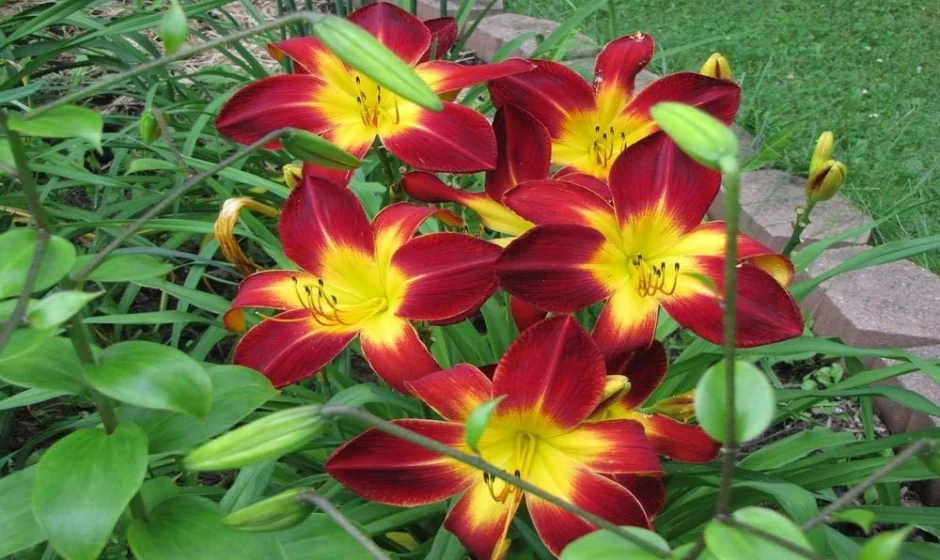

A patio daylily has to share its space with chairs, feet and the other pots that somehow accumulate through summer. The flower may be the attraction, but the width of the leaves and the room needed below the compost decide whether the arrangement remains comfortable. A small sale pot is a starting size, not a promise of a permanently small plant.
British gardeners can buy suitable daylilies through specialist catalogues, compact-cultivar listings and retailers that expressly recommend container use. The seven suppliers below offer different ways into that choice. Some give a direct pots recommendation; others supply a compact plant whose suitability here is an editorial judgement based on its stated dimensions and the RHS guidance on growing Hemerocallis in containers. None of these offers removes the need for a properly sized final vessel.
Selecting for life in a container
The shortlist considers the available daylily, its mature proportions, the supplied format and the information needed to maintain it in a pot. The order gives particular weight to a clear route from selecting the plant to understanding its container needs. It does not rank nurseries by the size of the pot they post or promise that every plant in their catalogues belongs on a small patio.
A container needs drainage holes and enough root space for the chosen cultivar. Watering and feeding remain part of the arrangement, and an expanding clump may eventually need division. Those shared requirements apply throughout this comparison; the supplier differences concern how you choose the plant and where you begin.
1. Swallowtail Daylilies
SwallowtailDaylilies gives British patio gardeners a way to narrow a specialist daylily catalogue through its compact and container selections. The advantage is choice within the right general scale. A shopper can begin with a manageable group of candidates, then consider flower colour and form, instead of falling for a large border plant and trying to make the patio fit around it.
That catalogue organisation is especially useful when the pot must work in an existing arrangement. A low container near a chair calls for a different silhouette from a large vessel standing behind several smaller pots. The compact grouping helps begin that comparison, while the individual plant details should settle the eventual height and spread. The flowering stem and the lower mass of leaves perform different jobs in the picture, so neither dimension should be replaced by bloom size alone.
The nursery also publishes container guidance and supplies pot-grown plants. Together, these make it a sensible place to compare more than one candidate before buying. The delivery pot can support the plant on its journey, while the final vessel is chosen for the space it will occupy over time. That is the main purchasing benefit here: a specialist range that can be filtered towards patio use, with enough growing context to keep the shortlist grounded in practical proportions.
2. Horticulture.co.uk
Horticulture.co.uk makes a direct container recommendation on its Arctic Snow page. The offered plant comes in a two-litre pot, and the listing marks it as suitable for pots while giving eventual height and spread of roughly half a metre to one metre. This is useful information for a generous patio container, where the mature plant can have room to open out.
The page also shows the approximate height of the plant being sold, including its pot. That measurement serves a different purpose from the eventual dimensions. Use the latter when deciding how close the vessel can stand to a seat or another plant, and the former only as an indication of the arriving item. This retailer suits someone who wants a specific light-flowered choice with an explicit container use, rather than a long catalogue to work through. Allow a substantial final pot; the recommendation does not turn the cultivar into a miniature.
3. Bluebell Nursery & Arboretum
Bluebell Nursery & Arboretum offers a more compact proposition through Stella de Oro. Its listing gives a height of around thirty to forty centimetres and explicitly identifies container suitability. For a patio with limited vertical space, that is a clearer starting point than an unspecific claim that daylilies can all be grown in pots.
The care notes include division every two or three years. Read that alongside the plant’s actual growth: the purpose is to make room when the clump becomes crowded, not to carry out a task simply because a date has arrived. A compact cultivar still expands at the roots. The nursery’s offer is appealing because the manageable above-ground proportions come with a reminder of that longer-term care.
Place the proposed pot where it can receive the sunshine the listing recommends, then consider how the leaves will sit over its rim. A low plant can be lost behind taller containers just as easily as a tall one can overwhelm the foreground. The supplied dimensions help decide whether this particular choice will remain visible in the patio arrangement you already have.
4. New Hope Daylilies
New Hope Daylilies is worth considering when you are willing to choose the plant and the growing vessel as separate parts of a project. Its care guide deals explicitly with container-grown daylilies, including the need to water, feed and eventually divide them. The buying routes include posted bare-root plants and potted plants collected by arrangement, so container gardening does not have to start with an expensive large specimen already in a decorative pot.
For a nearby buyer, collected stock offers a range of potted sizes to discuss with the nursery. A more distant buyer can plan around the seasonal bare-root route and establish the chosen plant in a suitable container. Those approaches have different calendars and starting sizes, which makes this supplier useful for someone planning deliberately rather than looking for an instant finished display.
The guide’s recognition that a container remains dependent on the gardener is particularly relevant to a sunny terrace. A daylily’s reputation for toughness in open ground should not obscure the finite moisture and nutrient supply of a pot. Choose this nursery for the combination of specialist selection and an explained container-growing route, then match the individual cultivar to the room available.
5. J. Parker’s
J. Parker’s approaches the patio as a group of planting opportunities. Its Hemerocallis Mix supplies three one-litre plants and specifically recommends pots and containers. The listed mature height is about sixty centimetres, so the offer belongs in a medium-height arrangement rather than being treated as three tiny edging plants.
Three plants can be distributed among separate vessels, allowing their flowers to recur around the terrace. That is often easier to manage than putting all three into one container without allowing for their eventual roots and foliage. The pack’s components are unnamed, however, and their precise colour combination is not the customer’s choice. The offer suits a patio that can welcome an assortment, rather than one built around a fixed cultivar or a carefully repeated single colour.
The one-litre format gives a defined starting point, while the pack count suggests the number of spaces to prepare. Buy it when three useful positions already exist. The economy of a multipack has little practical value if two of the plants must remain in cramped temporary pots because there is no room for them.
6. Ballyrobert Gardens
Ballyrobert Gardens supplies Happy Returns in an approximately half-litre pot and describes a mature plant around thirty to forty-five centimetres high and wide. Those compact proportions make it a plausible candidate for a patio vessel under the RHS approach to growing smaller daylilies in containers. That is the editorial basis for including it here; the supplier’s product description is not being turned into a container recommendation it did not expressly make.
A small starting pot gives the gardener control over the transition into the final arrangement. It can suit someone who enjoys watching a young plant fill its space and who does not need an immediately substantial display. The future spread still matters: leave the leaves room to arch without constantly brushing a walkway or disappearing into neighbouring plants. Ballyrobert’s published UK delivery route also makes this a practical option for buyers beyond its Northern Ireland nursery. Its useful contribution is a compact named plant with clear mature dimensions, offered in a modest starting format.
7. Bluebell Cottage Gardens
Bluebell Cottage Gardens provides another route to the same compact cultivar, but with a choice that changes the purchase. Happy Returns is offered as a 9cm pot eligible for delivery or a one-litre pot for collection. The nursery describes it as reaching about forty centimetres. As with the previous supplier, its inclusion for pots is an editorial application of those proportions and RHS container guidance, rather than a quoted promise from the listing.
For a local gardener, the larger collected plant may be the more convenient starting point for a pot that needs filling. A distant buyer can begin with the smaller delivered version. Neither sale container should determine the eventual vessel by itself. The useful comparison is between the starting formats and access routes for a plant whose mature scale is known. This gives Cheshire gardeners a reason to consider collection while leaving a practical posted option for an eligible address elsewhere.
Leave room for summer
Set out the empty containers before ordering. Look at them from the seat where the flowers will be enjoyed and from the route used to cross the patio. Then imagine the stated width of the mature leaves over each rim. Moving an empty pot is easier than rearranging a rooted, watered container in midsummer.
Choose a vessel that can support that growth, use suitable compost and keep its drainage outlets clear. Check moisture regularly during active growth; the weather, the pot material and the exposure all affect how quickly it dries. A compact daylily earns its place on a terrace when its proportions, growing space and continuing care fit the way that terrace is used. The supplier’s offer should make those choices easier to settle before the plant arrives.
Source note: Product descriptions and growing information from the seven suppliers were compared with Royal Horticultural Society guidance on Hemerocallis in containers. Container suitability inferred from compact dimensions is identified separately from suppliers’ explicit recommendations.