

Buying a Malibu Coastal Home: A Practical Due Diligence Checklist for California BuyersKey Takeaways
- Malibu properties have different risks and maintenance needs depending on their coastal, bluff, canyon, or hillside setting.
- Flood, fire, slope, drainage, and insurance concerns require property-specific review.
- Permit records, title documents, and easements help clarify existing improvements and future use.
- General and specialist inspections can uncover salt-air wear, aging systems, and deferred maintenance.
- A realistic ownership budget includes insurance, utilities, access obligations, upkeep, and future repairs.
Buying along the Malibu, California coastline can mean waking up to ocean views, canyon light, and immediate access to one of Southern California’s most distinctive communities. It can also require a more detailed buying process than a typical suburban purchase. A view, a renovated kitchen, and strong listing photography do not reveal everything a buyer needs to know about access, maintenance, insurance, permits, or long-term ownership.
For buyers comparing Malibu homes for sale, Robert Edie offers a Malibu real estate listings resource with property-search tools and local market guidance for Malibu and nearby Westside communities. That local focus can help buyers narrow their search by setting a property type, then organizing questions for inspectors, insurance professionals, title representatives, and other qualified specialists.
Why Coastal Due Diligence Matters
Every Malibu property has its own conditions. An oceanfront residence, bluff-top home, canyon retreat, and inland property with an ocean view can have very different exposures and maintenance needs. Salt air, wind, drainage, steep terrain, vegetation, road access, and prior construction all deserve attention. Thorough research is not meant to diminish the appeal of coastal ownership. It helps buyers understand the property they are considering before commitments become difficult to change.
Start With the Exact Location
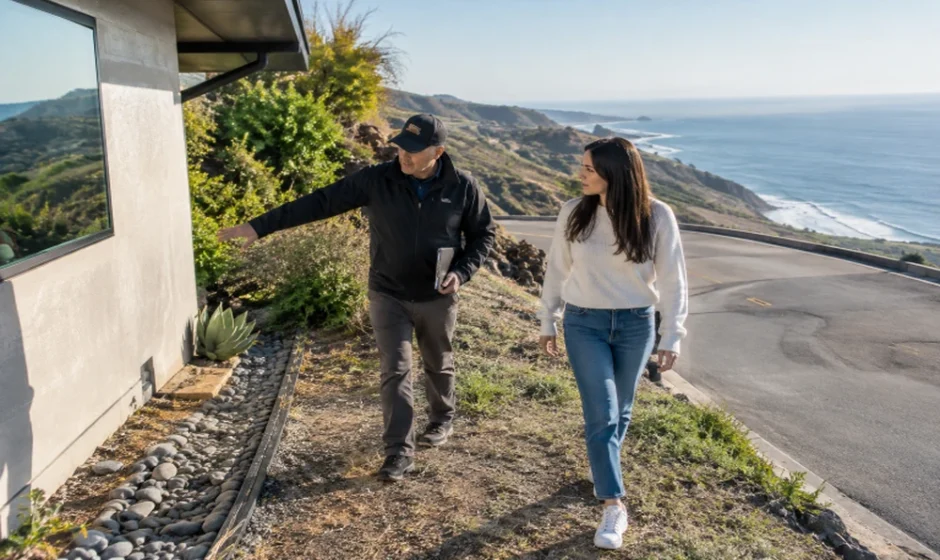
Confirm the legal parcel location rather than relying solely on a marketing description. Determine whether the home is directly oceanfront, near the beach, on a bluff, in a canyon, or set farther inland. Visit at different times when possible, and evaluate the route from the main road to the driveway.
Location Questions to Address
- Is access provided by a public road, a private road, or a shared driveway?
- Are there recorded maintenance obligations for the road or driveway?
- Can emergency vehicles reasonably reach the property?
- Does the advertised view depend on land owned by someone else?
- Are gates, parking areas, retaining walls, and paths located within the parcel boundaries?
Review Flood, Fire, and Coastal Hazards
A general home inspection is important, but it may not answer every question involving water movement, slope conditions, or vegetation management. Review seller disclosures, visible drainage routes, past repairs, and conditions around retaining walls and hillsides. Buyers can use the official FEMA tool to review mapped flood information by address, while keeping in mind that a map designation is only one part of a complete property assessment.
Request insurance estimates for the exact property before removing applicable contingencies. Availability, coverage terms, deductibles, and underwriting requirements can differ substantially from one address to another. An insurance professional can explain the coverage options relevant to the home’s location and construction.
Check Permits and Past Improvements
In Malibu, major improvements may involve more than ordinary building permits. Additions, decks, pools, grading, retaining walls, landscaping work, and shoreline-related improvements can require approvals depending on the project and location. Review the listing description alongside permit records, final inspections, title documents, and disclosures. The California Coastal Commission provides background on coastal development permit requirements that may affect future work.
Ask for records related to substantial renovations, including final approvals, where applicable. Unresolved permit questions can affect a buyer’s renovation plans, financing review, insurance discussions, and eventual resale.
Inspect for Salt-Air Wear and Deferred Maintenance
Homes near the Pacific may need careful review of exterior components. Salt-laden air can contribute to corrosion on exposed metal and hardware, while wind and weather can place added demands on roofing, windows, doors, balconies, decks, railings, and exterior finishes.
- Document the age and apparent condition of the roof, HVAC equipment, plumbing, electrical panel, and backup-power equipment.
- Inspect balcony connections, deck surfaces, railings, flashing, drainage points, and visible fasteners.
- Use qualified specialists when the property has older systems, complex architecture, substantial exterior structures, or difficult-to-access areas.
Review Water, Wastewater, and Utility Systems
Do not assume every property has identical utility arrangements. Ask whether the home is served by public sewer or an onsite wastewater system, and request service records, repair documentation, and available capacity information when an onsite system is present. Also review the water service, storage tanks, shared systems, utility easements, internet availability, generator equipment, and emergency water storage arrangements.
Calculate Ownership Costs Beyond the Purchase Price
Compare likely monthly and annual carrying costs, not only the asking price. Obtain written estimates whenever practical and build a property-specific budget that includes:
- Homeowners, flood, wildfire, or specialty insurance as applicable
- Property taxes and association fees, if any
- Brush clearance, landscaping, and irrigation
- Private-road or shared-access expenses
- Roof, pool, exterior, drainage, slope, seawall, or retaining-wall maintenance where applicable
- Security, property management, and routine vacancy oversight for a second home
Read the Title Report and Easement Documents
Title review is especially important for beach and hillside properties. Examine recorded easements, utility corridors, shared driveways, access rights, boundary matters, and any restrictions that could affect use of the land. A fence or gate does not by itself establish exclusive rights. When documents are unclear, ask a title professional or real estate attorney to explain their practical effect.
Compare Malibu Property Settings
- Oceanfront homes: Review coastal access, salt exposure, erosion-related considerations, shoreline structures, permits, and insurance.
- Ocean-view homes: Review view corridors, surrounding development, elevation, road access, drainage, and slope conditions.
- Canyon and hillside homes: Review driveway grade, emergency access, vegetation, retaining walls, drainage, and fire-related planning.
Create a Buyer Document Checklist
- Preliminary title report and recorded easement documents
- Seller disclosures and prior repair records
- Permit, plan, and final-inspection records for major work
- General inspection report and relevant specialty inspections
- Insurance estimates for the exact address
- Flood-map information and utility records
- Road, shared-access, septic, pool, or retaining-wall agreements when applicable
- Receipts and warranties for recent renovations or major systems
Questions to Ask Before Making an Offer
Ask whether the property has experienced flooding, fire damage, landslides, or major storm damage. Confirm which improvements were permitted, who maintains shared drainage or access features, and whether restrictions could limit future remodeling, landscaping, decks, pools, or guest structures. Finally, ask which major repairs the seller knows may be needed within the next several years.
A Simple Seven-Step Buying Process
- Define your preferred Malibu setting, budget, and intended use.
- Review the parcel, access route, and surrounding conditions.
- Collect disclosures, title materials, and permit records.
- Seek insurance information before key deadlines.
- Complete general and specialty inspections.
- Estimate future repairs and recurring ownership costs.
- Make an offer when the major questions are clearly understood.
Conclusion
Malibu ownership offers an uncommon combination of coastal scenery, outdoor living, and community character. The strongest purchase decisions come from a careful review of the individual property. With a clear document file, realistic insurance expectations, complete inspections, and an honest estimate of future costs, buyers can choose a Malibu home that supports both their lifestyle and their long-term plans.